A solid online reputation can be the difference between getting lost in the crowd or becoming the go-to choice in the landscaping community.
With 98% of clients scouring reviews and browsing social media before choosing a service provider, today’s clients are more discerning than ever.
Managing your online presence is like cultivating a well-kept garden; it takes attention, effort, and the right tools.
If you are ready to strengthen your online reputation management, keep reading to discover 10 practical steps any landscaping business can use to build a trustworthy, credible presence that attracts clients and fuels confident growth.
Key Takeaways
- A strong online reputation attracts clients and sets your business apart in landscaping.
- Regularly seek positive reviews and respond to feedback promptly to show commitment.
- Use social media and local SEO to increase reach and highlight your expertise.
- Share tips and project showcases to position your business as an industry leader.
- Have a plan to address negative feedback and protect your brand’s image.
- Professional ORM services can manage your reputation while you focus on quality work.
What is Online Reputation Management?
Online reputation management (ORM) is the practice of shaping and maintaining how a business is viewed online, ensuring that it appears trustworthy and appealing to potential clients. ORM involves proactive strategies across various platforms, from search engines to social media, helping businesses monitor and improve their digital image.
For landscaping businesses, ORM plays a crucial role in attracting local clients, fostering positive reviews, and handling feedback effectively.
Key aspects of ORM include:
- Review Monitoring and Response: Regularly tracking customer feedback on platforms like Google, Yelp, and Facebook and responding professionally to both positive and negative reviews.
- Social Media Management: Building a consistent, engaging presence on social media to connect with clients, share projects, and address questions or concerns in real time.
- Search Engine Optimization (SEO): Optimizing website content to rank higher in local search results, making it easier for potential clients to discover and trust your business.
- Content Creation: Sharing quality content, such as project highlights, client testimonials, and landscaping tips, to establish expertise and showcase your work.
- Crisis Management: Having a plan to address negative feedback or misinformation swiftly to protect your brand’s reputation during challenging situations.
- Competitor Analysis: Keeping an eye on competitors’ online reputations and strategies to identify areas of improvement for your own brand.
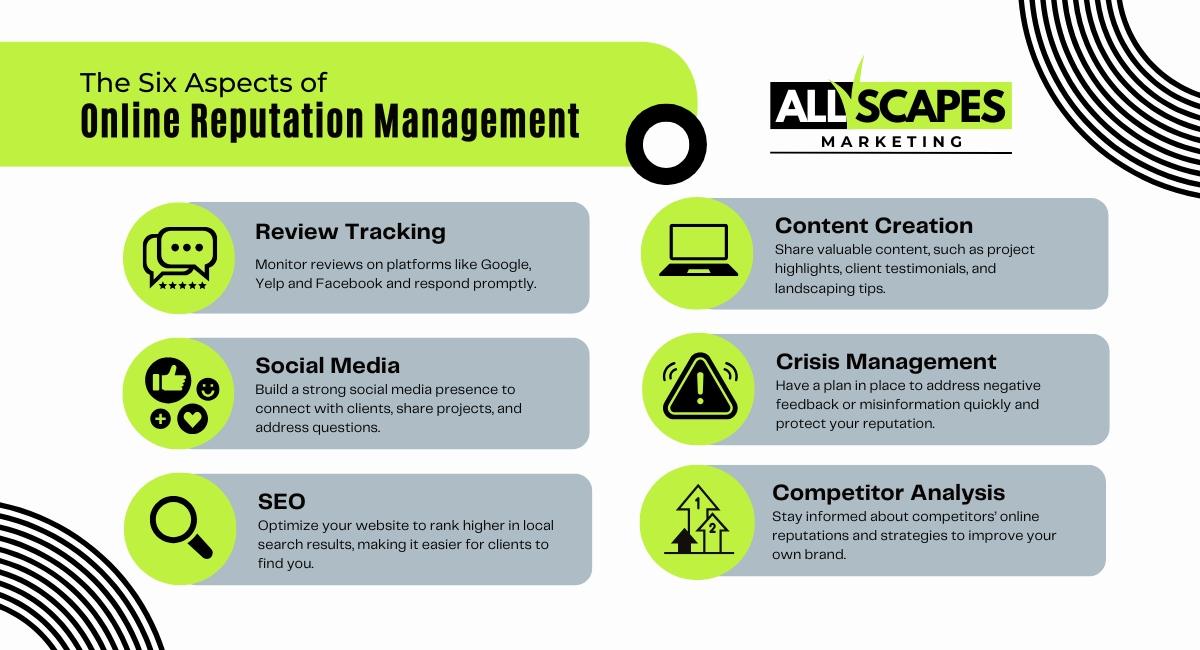
With a strong ORM strategy, landscaping businesses can foster trust, increase visibility, and make a lasting positive impression on potential clients.
What is the Main Objective of Online Reputation Management?
The main objective of ORM is to create and maintain a positive perception of a business or individual online. By strategically shaping how a brand is viewed across digital platforms, ORM aims to build trust, enhance credibility, and attract new customers.
Key goals include increasing visibility on search engines, managing customer feedback, engaging social media, and promptly addressing negative comments or misinformation.
Effective ORM helps businesses establish a solid brand reputation, foster customer loyalty, and ultimately drive business growth in a competitive digital landscape.
10 Strategies for Effective Online Reputation Management
To help landscaping business owners build a reliable and trustworthy brand image, here are 10 actionable insights on ORM strategies.
Tip #1: Claim Your Business Profiles
One important online reputation management strategy is claiming your business profiles on Google My Business, Yelp, and other online review sites, including industry-specific platforms like Houzz.
Listing sites ensure that your business information, from contact details to services offered, remains accurate, making it easier for potential customers to find you.
For landscapers, these profiles can showcase detailed service offerings—like garden design, hardscaping, or seasonal lawn care—which helps clients understand exactly what you provide.
Tip #2: Encourage Positive Reviews from Happy Customers
Request positive reviews from satisfied clients on review sites such as Google and Facebook.
Positive reviews build public perception and serve as a form of social proof for new visitors. Sharing these reviews on your website can reinforce your brand’s reputation and show potential clients why they should choose your services.
For landscaping businesses, following up with clients after a finished project, such as a backyard transformation or lawn installation, can be an ideal moment to ask for feedback.
Tip #3: Monitor Online Review Sites and Platforms Regularly
Stay on top of new online mentions and reviews using reputation management software or tools like Google Alerts and ReviewTrackers.
By monitoring online review sites, you can quickly address both positive and negative reviews, demonstrating to customers that you are attentive to their needs and responsive to feedback.
Tip #4: Respond to Positive and Negative Reviews Promptly
Show appreciation for positive reviews by thanking the customers and addressing negative comments professionally.
Offering solutions to negative reviews or inviting customers to discuss issues offline showcases your dedication to customer experience and business transparency.
When you promptly respond to negative links or comments, you can turn a bad review into an opportunity for improvement.
For example, if a client has concerns about their new patio or landscaping design, your quick response can reinforce their trust and encourage a positive resolution.
Tip #5: Leverage Social Media for Brand Image
A consistent social media presence is crucial for brand online visibility and can positively influence how customers perceive your company.
Share project photos, client testimonials, and landscaping tips on social media platforms to build brand awareness. This form of social media management helps create engaging content that can attract followers and foster a community of loyal customers.
Landscaping businesses can showcase before-and-after photos, seasonal planting guides, or even quick lawn-care tips to engage and educate their audience.
Tip #6: Optimize for Local SEO to Improve Search Results
Optimizing your website for local SEO can improve your business’s visibility on search engine results pages.
Using location-specific keywords like “landscaping services in San Diego” can attract local clients actively searching for nearby services, boosting your brand’s online reputation.
Local SEO ensures your business appears on the first page of search engines, which increases credibility and leads.
Tip #7: Create and Share Relevant Content
Content marketing helps build authority and establish your expertise. Quality content such as blog posts, video tutorials, and case studies showcase your business’s dedication to the industry.
By creating content that resonates with your target audience, you can enhance public perception and maintain a steady flow of new and existing customers.
For instance, a landscaping blog can cover topics like “Top Native Plants for Low-Maintenance Gardens” or “5 Tips for Winter Lawn Care,” positioning your brand as an expert in the field.
Tip #8: Implement a Crisis Management Plan
Be prepared to handle negative results with a proactive crisis management plan. Draft responses for various scenarios and determine who will manage negative feedback if it arises.
By planning ahead, your team can respond to online mentions quickly, protecting your brand’s tone and image during challenging situations.
In landscaping, this might mean preparing responses for feedback on delays due to weather or unexpected issues with project timelines.
Tip #9: Monitor Competitors for Actionable Insights
Conduct market research on your competitors’ ORM practices by reviewing their customer feedback and social media engagement.
Understanding competitors’ strengths and weaknesses provides actionable insights for your own strategy and can help you identify potential areas of improvement in your company’s online reputation.
Tip #10: Consider Professional ORM Services
For landscaping businesses that may not have time for consistent ORM, professional ORM services are invaluable.
Companies like All Scapes Marketing specialize in online brand reputation management, offering solutions that allow you to focus on your business while experts manage your online presence. Professional ORM services can save time and ensure your reputation remains strong.
This can be particularly helpful for landscapers who want to focus on onsite work and customer interactions while their ORM is handled by dedicated professionals.
Conclusion
Implementing these ORM strategies can boost your brand reputation, attract target customers, and create positive consumer sentiment around your services. By actively managing your online presence, you position your business for long-term success and growth.
Ready to elevate your landscaping business’s online presence? Contact us today to start building a reputation that attracts and retains clients!