Your landing page is often the first thing people see after clicking your ad, email, or offer. If that page isn’t clear, focused, and built to convert, you’re leaving money on the table.
The good news? You don’t need fancy tools or endless revisions. You just need the right structure.
In this guide, you’ll learn how to design a landing page that speaks to your audience and gets them to take action step by step.
What Exactly Is a Landing Page?
A landing page is a standalone web page designed with a single, specific goal in mind, usually to convert visitors into leads or customers.
It’s different from your homepage or service pages. Those pages often have multiple links, menus, and general information. A landing page removes all of that.
It guides the visitor toward one clear action, such as:
- Filling out a lead form
- Booking a call or service
- Making a purchase
- Signing up for a free trial, webinar, or download
There’s no menu bar to distract. No extra links to click away. Everything on the page supports that one goal.
Why Does This Matter?
When someone clicks on your ad, email, or social post, they expect to land on a page that delivers exactly what was promised. If the page is too broad, slow to load, or hard to navigate, they’ll leave without taking action.
- 74% of users say they will leave a site if it doesn’t meet their expectations within 15 seconds.
- Businesses see a conversion rate increase of up to 55% when they direct traffic to a dedicated landing page instead of a homepage.
- Landing pages with a single call-to-action can boost conversions by up to 300%, compared to pages with multiple competing links or offers.
A well-designed landing page removes distractions and matches user intent—turning more visitors into real business opportunities.

Key Elements of High-Converting Landing Pages
Every high-performing landing page shares a few essential elements. These aren’t optional; they’re what help turn visitors into leads or customers.
Here’s what you need to include:
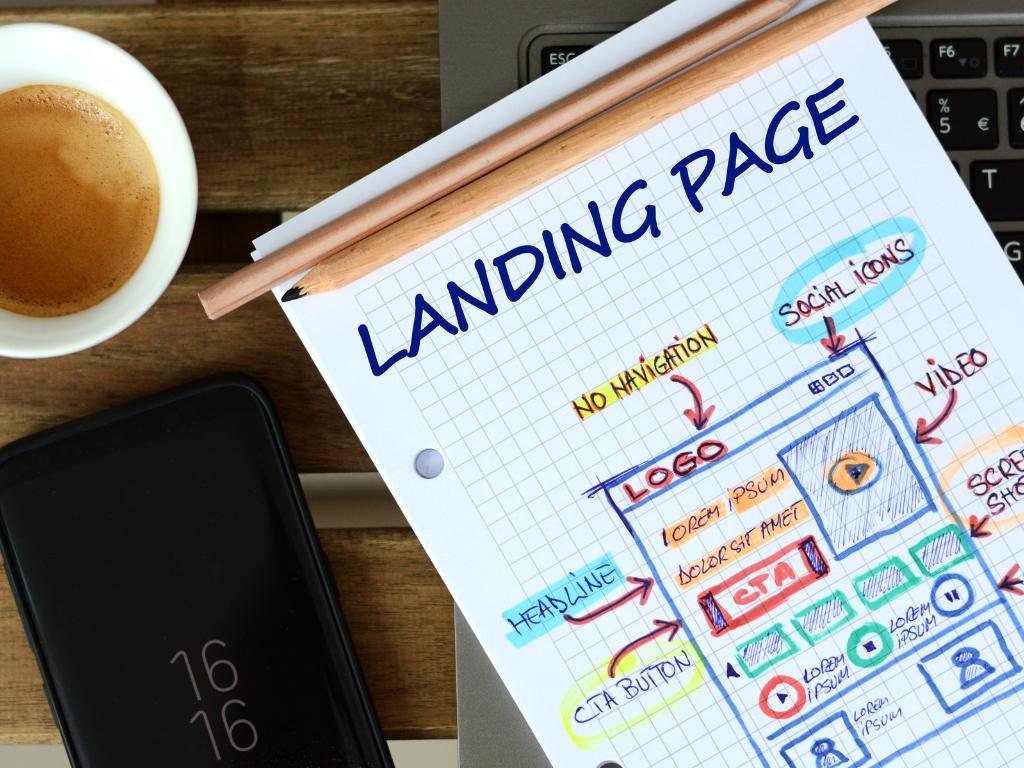
- Clear Headline: tells visitors exactly what you’re offering, right away
- Supporting Subheadline: adds context or highlights who the offer is for
- Strong Visuals: images or videos that reinforce your message and show the offer in action
- Benefit-driven Copy: focuses on how your offer solves a problem or improves something for the visitor
- Call-to-action (CTA): tells people what to do next using direct, action-oriented language
- Social Proof: testimonials, reviews, or trust badges to build credibility
- Layout with No Distractions: no navigation bars, extra links, or unrelated content that could pull attention away from your goal
Each of these elements plays a role in guiding your visitor from interest to action. Miss one, and your conversion rate could take the hit.
Ready to Build? Here Are 10 Essential Steps to Build Landing Pages That Convert
1. Define Your Goal
A landing page goal is the single action you want your visitor to take, such as filling out a form, booking a call, or making a purchase. It’s the reason the page exists.
Without a clear goal, your page becomes confusing and ineffective. Visitors won’t know what to do next, and you won’t be able to measure success.
How to Achieve It
Decide on one specific outcome before writing or designing anything. Avoid adding extra links, offers, or content that doesn’t support that outcome. Keep everything aligned with your one goal.
2. Know Your Audience
Your audience refers to the specific group of people you’re targeting with your landing page. It includes their needs, challenges, and what motivates them to take action.
Understanding your audience helps you craft a message that speaks directly to them. If your content doesn’t match their mindset, they’ll leave without converting.
How to Achieve It
Identify what your audience cares about, what problems they want solved, and the language they use. Use customer surveys, sales conversations, or reviews to gather insights.
3. Craft a Clear Headline
A headline is the first sentence or phrase visitors see when they land on the page. It tells them what the offer is in plain language.
A strong headline keeps people on the page. If it’s confusing or too vague, they’ll bounce before reading anything else.
How to Achieve It
Write a short, benefit-driven headline (under 10 words) that tells people what they’re getting and why it matters. Test a few variations to find the clearest one.
4. Write a Compelling Subheadline
The subheadline is a supporting line that adds context to the headline. It gives more detail about the offer and who it’s for.
It’s important because it reassures visitors they’re in the right place and helps them quickly decide if your offer fits their needs.
How to Achieve It
Use this space to explain the outcome or benefit of your offer. Mention who it’s for or what problem it solves. Keep it short and specific.
5. Use High-Quality Visuals
Visuals include photos, illustrations, or videos used to support your landing page content. They help users understand your offer and add visual interest.
People process images faster than text, so visuals shape the first impression of your brand and offer. Poor or generic visuals can hurt trust.
How to Achieve It
Use real photos, custom graphics, or demo videos. Avoid stock photos that don’t match your message. Show real results, people, or product use whenever possible.
6. Keep Your Copy Focused
Landing page copy is the written content that explains your offer and encourages action. It includes your intro, benefits, bullet points, and call-to-action prompts.
Well-written copy answers questions and addresses objections. Unfocused or wordy content confuses readers and lowers conversions.
How to Achieve It
Start by addressing the reader’s pain point. Follow with how your offer solves that problem. Use short paragraphs, bullet points, and direct language. Cut anything that doesn’t support the goal.
7. Create a Strong Call-to-Action (CTA)
A CTA is a button or line of text that tells visitors what to do next—like “Download Now” or “Book a Free Call.”
It’s the most critical part of your page. Without a clear, compelling CTA, even interested visitors may leave without taking action.
How to Achieve It
Use action verbs and make it specific. Tell people exactly what they’ll get when they click. Make the button stand out with contrasting colors and place it in multiple spots on the page.
8. Remove Distractions
Distractions are anything that pulls attention away from the goal—like navigation menus, social links, or unrelated content.
They break the visitor’s focus and increase the chances they’ll click away before converting.
How to Achieve It
Remove site-wide navigation, footers, and sidebars. Keep the layout clean and focused. Only include content that supports the page goal.
9. Add Social Proof
Social proof includes testimonials, reviews, client logos, or performance stats that show others trust your brand.
It builds credibility. Visitors are more likely to take action when they see others have had a positive experience with you.
How to Achieve It
Use quotes from real customers, ratings, or case study highlights. Add photos or names if possible. Place social proof near your CTA to reinforce trust at the right moment.
10. Make It Mobile-Friendly
A mobile-friendly landing page is one that looks and works well on phones and tablets. It loads quickly, resizes automatically, and is easy to navigate on smaller screens.
Most people will view your page on a mobile device. If it doesn’t work well, they’ll leave immediately.
How to Achieve It
Use responsive design, large fonts, and buttons that are easy to tap. Test the page on multiple devices before launch. Compress images to keep load times fast.
Ready to Turn Clicks Into Customers?
Building a high-converting landing page doesn’t have to be complicated; it just needs to be intentional.
If you’re ready to stop guessing and start generating real results, All Scapes Marketing can help. We design landing pages that speak to your audience, highlight your offer, and drive action.