Imagine having a storefront on the busiest street in town—but without a sign or clear way for people to find you. That’s what it’s like to have a website without a strong SEO strategy.
SEO isn’t just a tool for ranking higher on search engines—it’s a way to guide your audience straight to your doorstep, build trust, and create lasting connections.
In this guide, we’ll explore how to lay the groundwork for an effective SEO strategy, so you can turn online traffic into real growth for your business.
What is Organic Growth?
Organic growth refers to the natural and sustainable increase in a business’s reach, revenue, or market share without relying on external factors like paid advertising or acquisitions. Instead, it focuses on leveraging existing resources and strategies to expand the business organically over time.
In digital marketing, organic growth often refers to increasing website traffic, customer engagement, and conversions through unpaid methods such as:
- Search Engine Optimization (SEO): Improving visibility in search engine results to attract visitors searching for relevant content.
- Content Marketing: Publishing high-quality, valuable content that resonates with your audience and encourages sharing.
- Social Media Engagement: Building a community of loyal followers through authentic interactions and consistent posting.
Organic growth emphasizes long-term sustainability and building a strong foundation for your business, often resulting in a loyal customer base and a positive reputation in your industry.
Is Organic Growth Necessary?
Organic growth is essential for businesses because it offers sustainable, long-term benefits that drive overall success. Here are some of its advantages:
- Cost-Effective: Unlike paid advertising, organic growth relies on strategies like SEO and content marketing, which often require less financial investment over time.
- Builds Trust and Credibility: Users are more likely to trust businesses that appear organically in search results rather than through ads. This trust fosters brand loyalty.
- Sustainable Results: While paid campaigns stop delivering results once funding ends, organic growth strategies continue to drive traffic and engagement over the long term.
- Attracts High-Quality Traffic: Organic growth focuses on reaching users who are genuinely interested in your products or services, resulting in better engagement and higher conversion rates.
- Strengthens Brand Authority: Consistently creating valuable content and ranking highly in search results establishes your business as an authority in your industry.
- Supports Scalability: By building a solid foundation of organic traffic and loyal customers, your business can scale more efficiently and sustainably.
So now you know why organic growth matters—but how do you actually achieve it? That’s where SEO steps in. Let’s dive into how an effective SEO-strategy can help your business grow naturally and sustainably.
SEO and Organic Growth
Nowadays, simply having a website isn’t enough. To stand out and succeed, you need a well-thought-out SEO strategy that helps your business grow organically. Here’s why it’s so important:
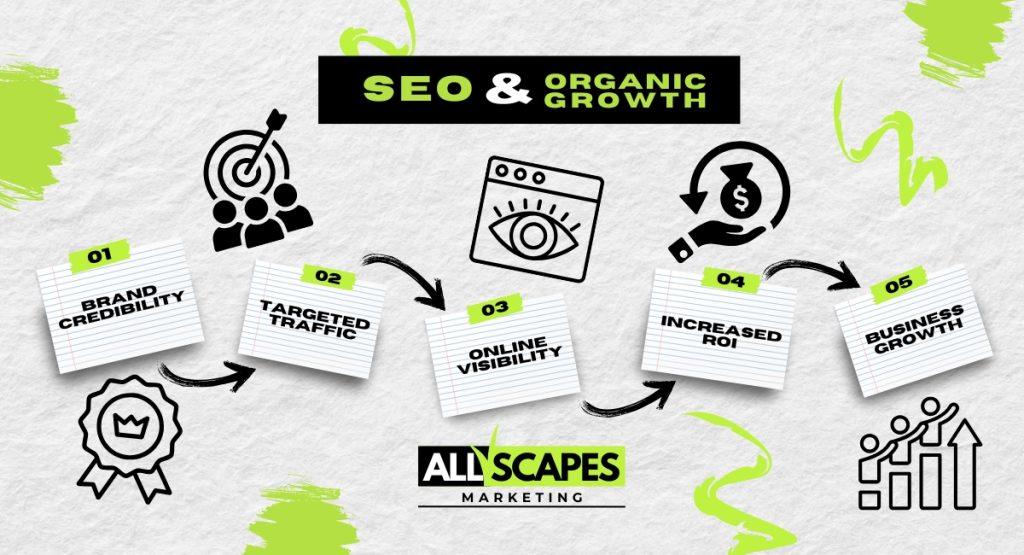
- Boosts Online Visibility: SEO ensures your website is easy to find by placing it higher in search engine results. The more visible your business, the greater the chance of attracting potential customers.
- Drives Targeted Traffic: By optimizing for the right keywords, SEO brings in visitors who are actively searching for what you offer. This means more meaningful interactions and better conversion opportunities.
- Builds Brand Credibility: Appearing at the top of search results signals authority and trustworthiness. A strong SEO presence reinforces your brand’s reputation and builds confidence among potential customers.
- Increases ROI: SEO provides long-term value by delivering consistent organic traffic without the ongoing costs of paid advertising. It’s a smart investment that pays dividends over time.
- Supports Business Growth: A strong SEO optimization strategy lays the groundwork for sustainable growth. It helps you connect with your audience, expand your reach, and achieve broader marketing goals.
At this point, you’re probably wondering, “What do I need to do to make this work for my business?” Don’t worry—we’ve got you covered. Let’s break down the steps to build a solid foundation for organic growth that delivers real results.
How to Build a Strong Foundation for Organic Growth
Organic growth doesn’t happen by chance—it’s the result of intentional, focused effort. The good news? With the right approach, you can create a strategy that sets your business up for long-term success. Here’s how to get started:
1. Conduct Thorough Keyword Research
Let’s start with the basics: keyword research. Think of this as figuring out what your audience is typing into Google to find products, services, or solutions like yours.
Instead of guessing, use tools like Google Keyword Planner, SEMrush, or Ahrefs to uncover terms people are actually searching for. Long-tail keywords are a goldmine for targeting people who know exactly what they want.
And don’t forget to check out your competitors. They might already be ranking for keywords you can optimize for or even outdo.
2. Optimize On-Page Content
Once you’ve got your keywords, it’s time to optimize your website. Every page should clearly signal to search engines what it’s about. Use keywords naturally in titles, headers, and meta descriptions.
Break your content into sections with headings (like this one!) to make it scannable. Don’t overlook images—adding descriptive alt text not only helps with mobile SEO strategy but also makes your site more accessible.
Sprinkle in some internal links to guide visitors to other helpful content on your site. It’s like creating a roadmap for both search engines and users.
3. Focus on High-Quality Content
Content is the backbone of SEO, and it’s not just about writing a lot—it’s about writing well. Your audience should find your blog posts, guides, or videos genuinely helpful.
A great trick is to organize your content into clusters: create a main “pillar” page for a broad topic, then link it to more detailed posts about subtopics.
Don’t let older content gather dust—updating it with fresh stats or insights can bring it back to life and improve its ranking. Quality beats quantity every time.
4. Enhance Technical SEO
Think of technical SEO as housekeeping for your website—it ensures everything runs smoothly behind the scenes. A fast-loading site is essential because no one likes waiting for a page to load.
Your website should also be mobile-friendly since most searches happen on phones these days. Pay attention to how your site is organized; a clear structure helps search engines and visitors find what they need.
Adding structured data (like schema markup) can give search engines even more context about your site, potentially earning you a featured spot in search results.
5. Build Backlinks
Backlinks are like votes of confidence from other websites, and they carry a lot of weight in SEO. The more high-quality backlinks you have, the more credible your site appears to search engines.
To get them, create content that others want to link to—think in-depth guides, original research, or useful tools. Another approach is to look for broken links on other sites and offer your content as a replacement. It’s a win-win—you help them fix an issue, and you gain a valuable link.
6. Leverage Local SEO
If your business serves a specific area, local SEO is your best friend. Start by optimizing your Google Business Profile with accurate details, engaging photos, and customer reviews.
Use location-specific keywords—like “best coffee shop in Denver”—to show up in local searches. Hyperlocal content can also be a game-changer, like writing blogs about events or attractions in your area.
Don’t forget consistency—your business name, address, and phone number should match across all directories.
7. Monitor and Analyze Performance
SEO isn’t a one-and-done thing. It’s an ongoing process, and you’ll need to track how things are working. Tools like Google Analytics and Search Console can show you which pages are performing well and which ones need a little love.
Pay attention to engagement metrics like how long people stay on your site and whether they’re bouncing off right away. Monitoring keyword performance is also key—if something’s not working, you can adjust and try again.
8. Stay Updated on SEO Trends
The world of SEO changes fast, so staying in the loop is crucial. Google tweaks its algorithm regularly, and new technologies like AI are constantly emerging.
Keep an eye on trusted resources like Moz or Search Engine Journal to stay informed. Don’t be afraid to experiment with tools like SurferSEO or Jasper to streamline your efforts.
Trends like voice search and zero-click searches are shaping the future, so it’s smart to adapt your strategy accordingly.
Final Thoughts
A strong SEO strategy is the foundation for organic growth and long-term success in the digital landscape. By implementing the basics—keyword research, on-page optimization, quality content, technical SEO, and link building—business owners can achieve greater visibility and connect with their target audience effectively.
Ready to build your SEO strategy? Contact All Scapes Marketing today to start your journey toward sustainable growth!