
When someone hears about your business, what’s the first thing they do?
They look you up.
They read your reviews, scroll through your website, and maybe check your social media. And just like that, they’ve formed an opinion, without ever speaking to you.
That opinion matters more than you think.
Whether it’s a glowing review or a complaint left unanswered, what people find online plays a big role in whether they decide to trust you or move on to someone else.
That’s where brand reputation management comes in. Let’s break down what it actually means, why it’s critical for your business, and how you can take control of the way people see your brand.
What Is Brand Reputation Management?
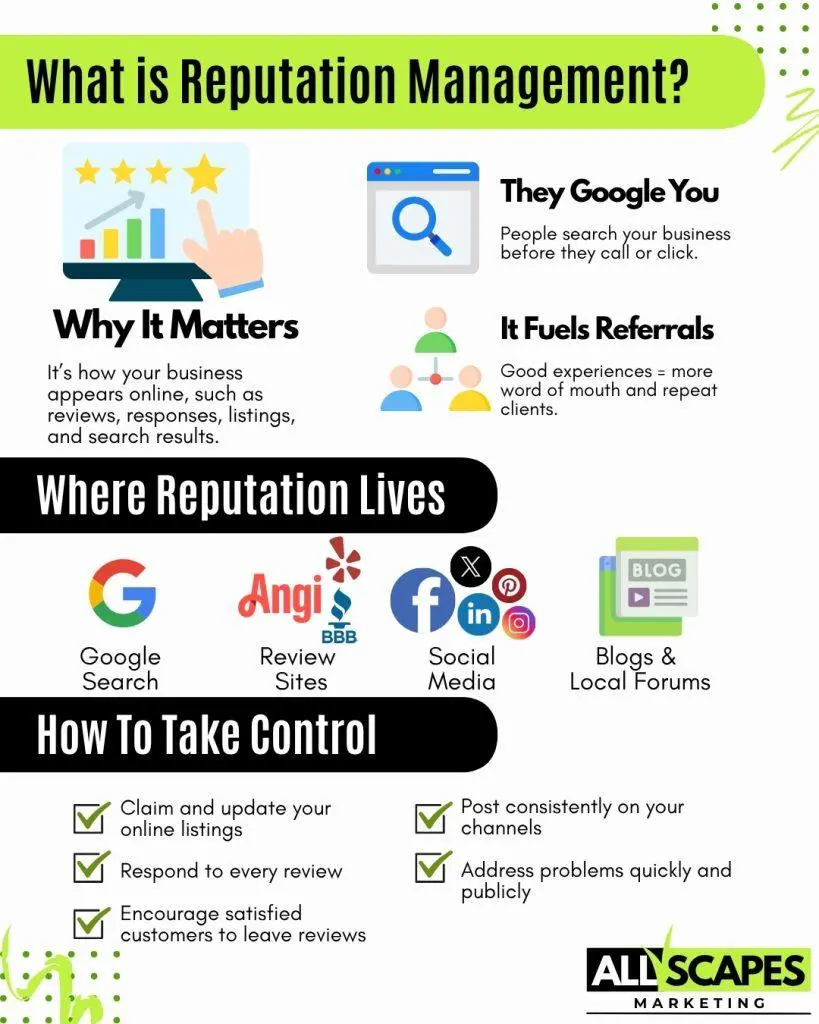
Brand reputation management is the process of monitoring, maintaining, and influencing how your business is perceived by others.
It covers:
- What customers are saying about you online
- How you respond to both good and bad feedback
- What shows up when someone Googles your business
- How consistent your message is across platforms
It’s all about being present, building trust through honest communication, and actively shaping how people experience your brand.
In short, it’s reputation insurance for your business.
Why Brand Reputation Management Matters for Small Businesses
Brand reputation management plays a bigger role in success than most business owners realize. Here are the key reasons it matters for small businesses.
1. Most People Look You Up Before Calling
Whether someone hears about you from a friend or sees your ad, chances are they’ll search your business name before taking the next step.
If your reviews are outdated or negative comments show up first, they might move on to a competitor, without ever contacting you. You never even get the chance to explain yourself.
2. Online Reviews Heavily Influence Trust
According to a 2025 survey by BrightLocal, 89% of consumers read online reviews for local businesses, and 53% want to read reviews detailing positive experiences.
If your reviews are ignored or unresolved, your business appears unprofessional, even if you offer a great service.
3. Reputation Impacts Referrals and Repeat Business
People share experiences. If a customer loves your service and sees you engaging online, they’re more likely to:
- Recommend you to others
- Leave a positive review
- Come back for repeat service
On the flip side, if their negative experience goes unaddressed, they’re just as likely to spread the word in a damaging way.
What Happens If You Don’t Manage It
Many small business owners focus on marketing and customer service, but ignore how they’re perceived online. Here’s what that can cost you:
- Bad reviews go unanswered. Silence implies you don’t care.
- Search results become outdated. Old addresses or business hours mislead customers.
- Negative content ranks first. People see complaints before your own messaging.
- Your competitors look more credible. A polished presence stands out, even if the service isn’t better.
If you’re not managing your reputation, it becomes a liability instead of an asset.
Where Your Brand Reputation Lives Online
Your reputation isn’t limited to one platform. Here’s where people are forming opinions about your brand online.
Google Search
Search your business name and location. See what pops up:
- Is your Google Business Profile up to date?
- Are the top reviews accurate?
- Does your website appear first?
If the first few results include bad reviews or old pages, you’re losing control of your first impression.
Review Sites
Each industry has platforms that influence buying decisions. Make sure your profiles are claimed and monitored.
Start with:
- Google Business Profile
- Yelp
- Angi/HomeAdvisor (for service-based businesses)
- TripAdvisor or OpenTable (for restaurants and venues)
Social Media
Even if you’re not active on every platform, others might be talking about you.
People tag businesses in complaints or compliments. If you’re unaware of those conversations, you miss opportunities to respond, fix problems, and build loyalty.
Blogs and Local Forums
Your business might be mentioned in community pages, forums, or local news articles. These mentions can build your authority—or create confusion if the info is outdated or inaccurate.
Use tools like Google Alerts to track mentions of your business name.
How to Take Control of Your Brand Reputation
You can’t control everything people say, but you can control how your brand shows up. Here are practical steps to take charge of your online reputation.
1. Claim and Update Your Online Listings
Inconsistent or incorrect listings make you look unprofessional. They also frustrate customers who receive incorrect information, such as the wrong hours, phone number, or location.
Double-check the following:
- Business name
- Address
- Phone number
- Hours
- Website and social links
Use the same information across all platforms to build trust and support SEO.
2. Respond to Every Review
Whether it’s a 5-star review or a harsh complaint, responding shows that you care.
- Thank happy customers. Let others see you’re grateful for good feedback.
- Acknowledge negative reviews politely. Offer a solution or invite the person to talk privately.
- Never argue, blame, or ignore—even if the customer is wrong.
Here’s an example:
Bad – “This never happened. You’re wrong.”
Better – “We’re sorry to hear this. Please call us directly so we can make it right.”
Your responses aren’t just for the reviewer. They’re for future customers watching how you handle things.
3. Encourage Satisfied Customers to Leave Reviews
Most people won’t leave a review unless asked.
Make it a habit to:
- Send a follow-up email after the service.
- Include a review request on invoices or receipts.
- Ask in person if you’ve built rapport.
Avoid offering incentives. Keep it honest.
4. Post Consistently on Your Channels
Publishing helpful content, customer stories, or updates builds credibility. It pushes negative content down and highlights your expertise.
You don’t need to post daily—just stay active enough to show you’re engaged and available.
5. Address Problems Quickly and Publicly
If a mistake happens, don’t hide from it. Own up to it, fix it, and communicate clearly. Customers don’t expect perfection, but they do expect accountability.
Can You Manage It All Yourself?
You can start with the basics. But brand reputation management takes time, consistency, and attention to detail.
If you’re running a small business, your time is probably better spent serving clients, managing employees, or generating revenue.
That’s where a marketing team comes in. A company like All Scapes Marketing helps small businesses:
- Monitor online presence
- Manage reviews and responses
- Improve search visibility
- Build a stronger, more trusted brand
You’re still in control, but with expert support behind the scenes.
Ask Yourself This
- What shows up when someone Googles my business?
- Have I responded to all my recent reviews?
- Is my online information consistent and accurate?
- Do I have a plan to deal with negative feedback?
If the answer to any of those is “no,” it’s time to take action.
Your reputation is already out there. The question is “Are you managing it?”
Reach Out Today!
Ready to take control of your brand’s reputation? All Scapes Marketing helps small businesses monitor reviews, respond to feedback, and build trust across every platform. If you want a stronger online presence that actually supports your growth, let’s talk.